

Inaccurate Inventory and Limited Visibility Across Warehouse Operations
Managing warehouse operations manually often leads to inaccurate inventory records, inefficient stock movement, and limited visibility into material usage. As production scales, businesses need a reliable system to ensure that inventory remains accurate, procurement is well-documented, and stock levels support uninterrupted operations.
Common operational challenges include manual tracking of incoming and outgoing inventory, difficulty monitoring raw material consumption for each production order, limited visibility into vendor purchasing history, unexpected stock shortages due to late replenishment, poor estimation of material waste during production, and time-consuming stock audits and inventory adjustments.
A Central Inventory System from Purchase Order to Production Floor
We developed a centralized Warehouse Management System that automates inventory movement, improves material traceability, and helps businesses maintain accurate stock records across every stage of warehouse operations.
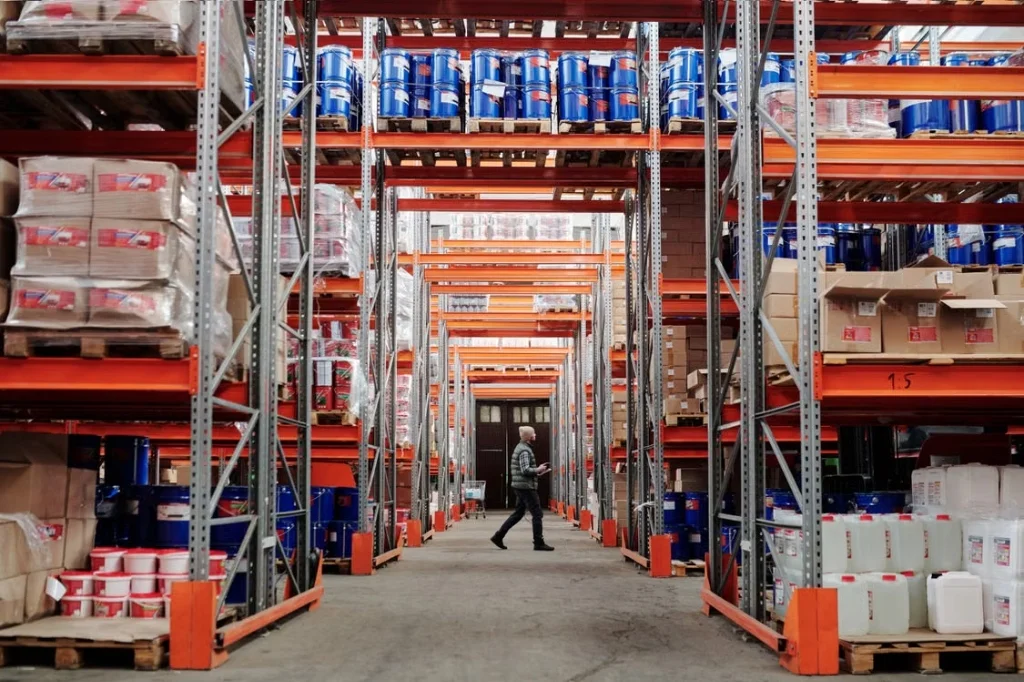
Automating Inventory Accuracy from Receiving to Production
01
Automated Purchase Orders & Stock Movement: The system automatically records purchase orders, inbound inventory, and outbound stock transactions, ensuring every stock movement is reflected in real time while reducing manual data entry.
02
Material Consumption Tracking per Production Order: Raw material usage is tracked for each production order, providing clear visibility into how inventory is consumed throughout the manufacturing process and supporting more accurate production planning.
03
Vendor Transaction History: A complete history of purchases and transactions is maintained for every vendor, making it easier to review procurement activities, evaluate supplier performance, and access historical purchasing data whenever needed.
04
Low Stock Alerts: The system proactively monitors inventory levels and sends alerts when stock reaches predefined thresholds, allowing teams to replenish inventory before shortages impact production.
05
Material Waste Estimation: Built-in waste estimation helps businesses monitor expected material loss during production, enabling better cost control and more informed inventory planning.
06
Stock Opname & Manual Adjustments: The WMS supports physical inventory counts along with authorized manual adjustments, ensuring that warehouse records remain aligned with actual inventory conditions.
Greater Inventory Accuracy, Stronger Production Support, and Efficient Warehouse Management
By centralizing warehouse operations into a single platform, the WMS helps businesses achieve greater inventory accuracy, stronger production support, and more efficient warehouse management.
Key outcomes include improved inventory accuracy through automated stock movement recording, greater production visibility with material consumption tracking for every order, better procurement insights through comprehensive vendor transaction history, fewer stock shortages with proactive low-stock alerts, more effective cost control through waste estimation and inventory monitoring, and faster inventory reconciliation with streamlined stock opname and adjustment processes.