

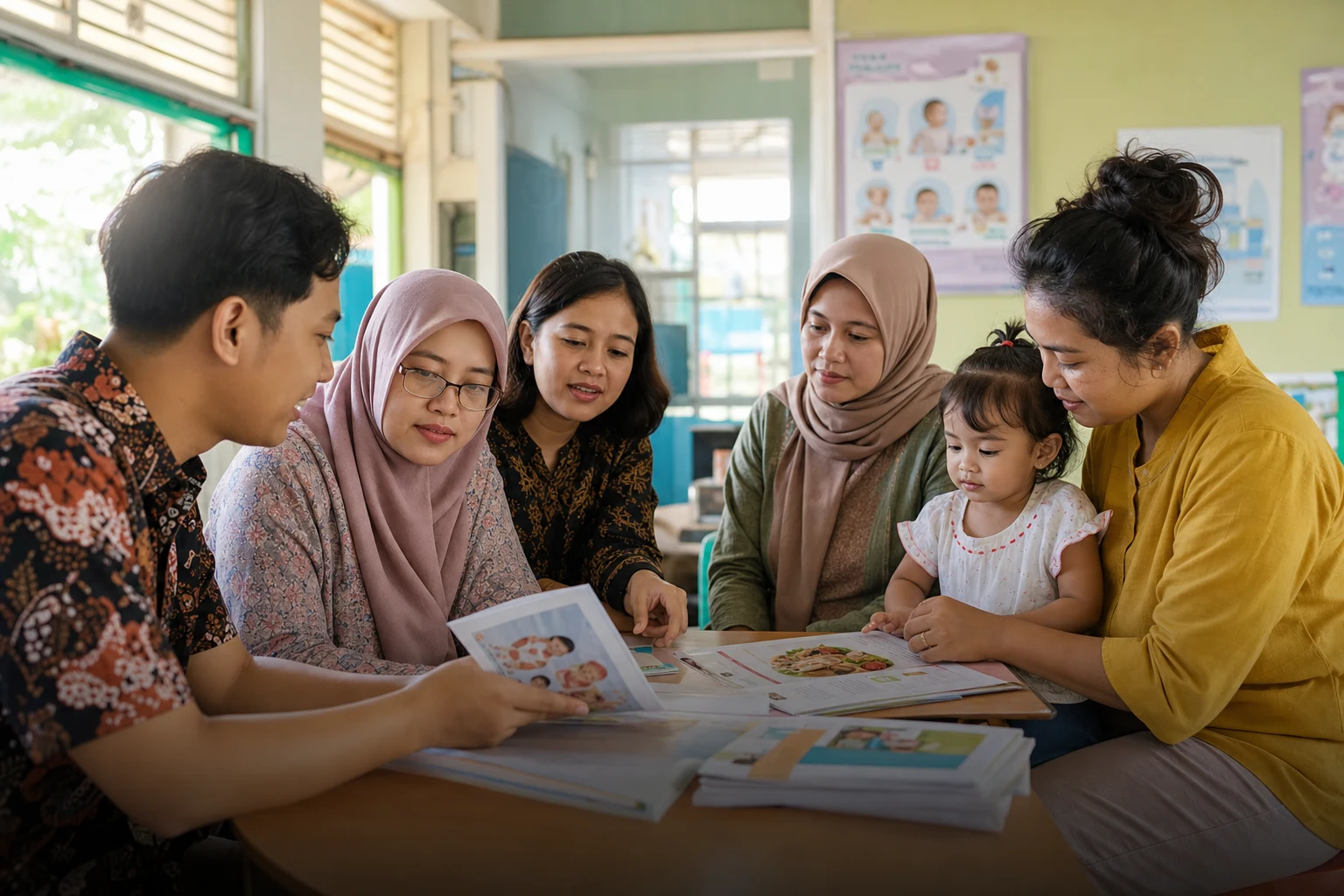
Information Alone Does Not Automatically Change Household Practice
Family assistants work with different levels of knowledge, confidence, resources, and support. A useful guide therefore had to help facilitators identify barriers and choose an appropriate conversation, not merely repeat health messages.
The content also needed to stay consistent with programme objectives while using examples and language that felt relevant at neighbourhood level.
From Policy Language to Daily Practice
The guide had to remain evidence-based while being understandable and useful during real conversations with families. Content was structured around specific behaviours, barriers, and supporting actions.
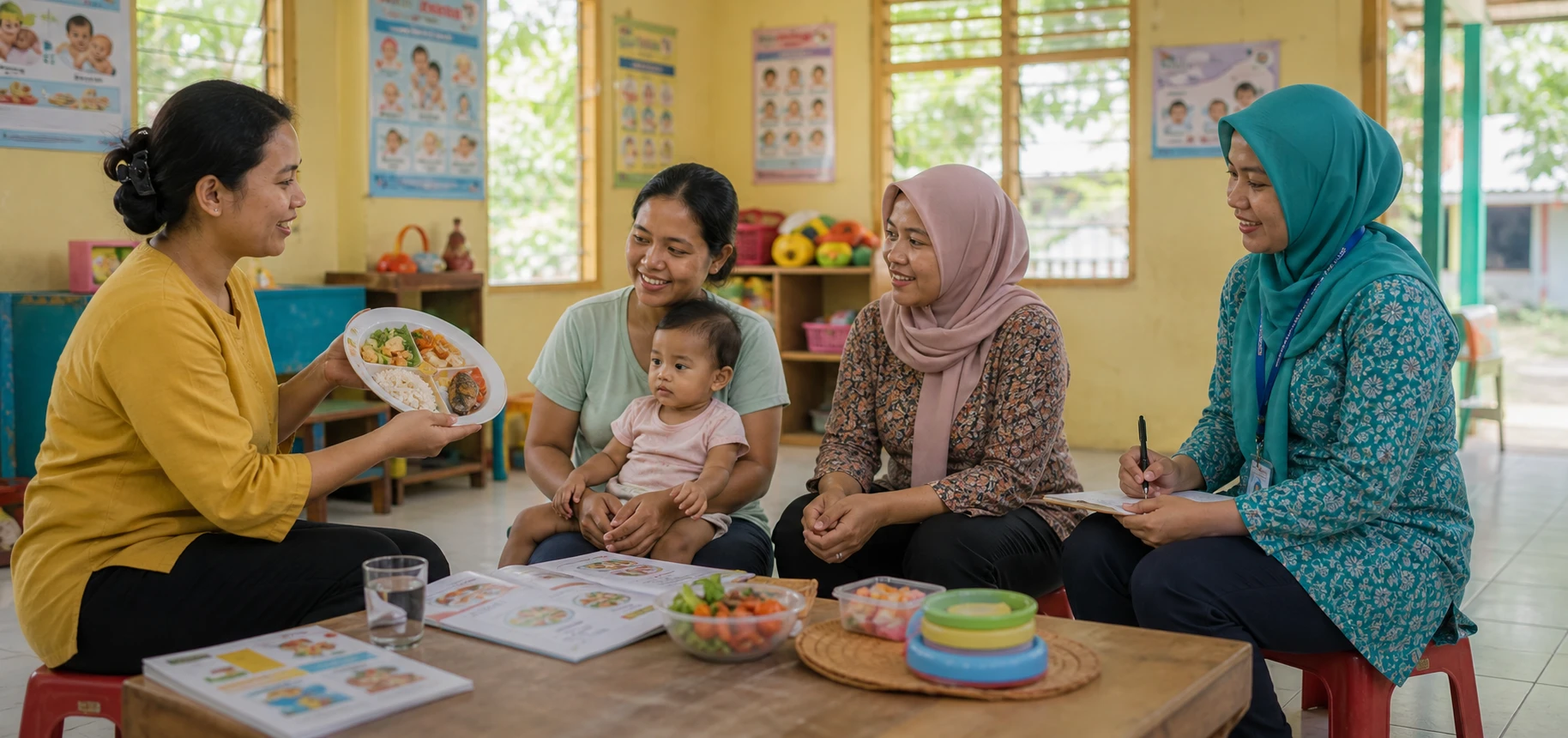
Guidance Built Around Conversation and Follow-Up
Behaviour-Based Modules
Each module connects a desired practice with common barriers, discussion prompts, examples, and realistic next steps.
Facilitator Support
Visual cues and simple sequencing make it easier to prepare a session, record commitments, and revisit progress.
A Consistent Tool for Local Assistance
Clear prompts, scenarios, and follow-up steps help facilitators communicate consistently while adapting to each family context.
The guide creates a shared method for assistance without removing the facilitator judgment needed to respond respectfully to different household conditions.